Swagger per API user
Each API user can have a Swagger URL with a random part. The docs list the system, custom and database APIs that user can call, and the URL answers only while Swagger docs are on for it.
API Maker
The framework for AI era

Team & delivery
Swagger docs, TypeScript types, code snippets, a debugger and code search, built into API Maker.
Everything around the APIs is there too. Each API user gets Swagger docs of the APIs it may call, your schemas become TypeScript interfaces for your code, the API testing page writes client code in 21 languages, and you can debug custom code with breakpoints, search all your code at once, or edit it in your own editor.
Step through it, slow it down, or open the full canvas.
 api-maker/features/developer-toolsLive
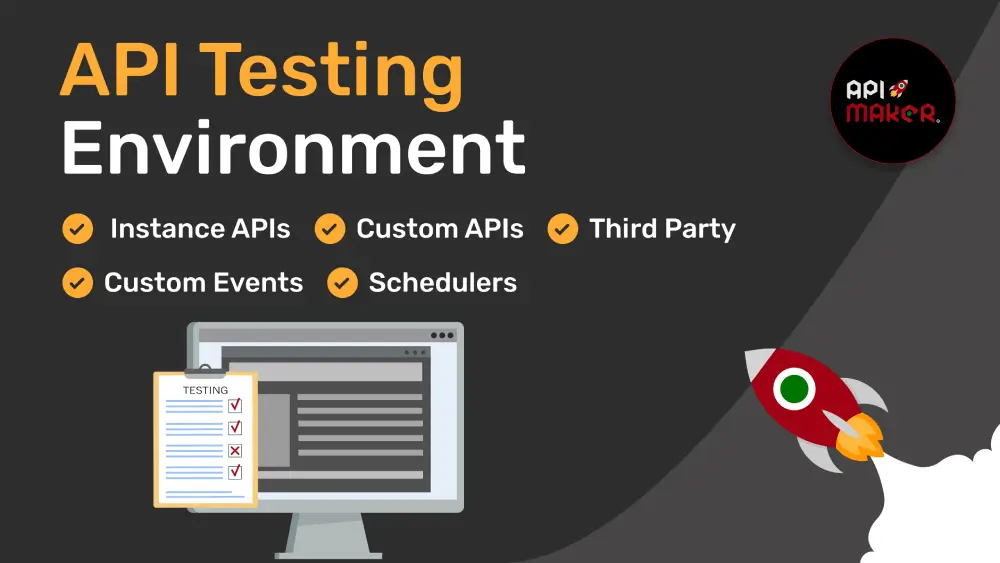
Try any API in the panel. Pick an API, get a sample payload, set the token of a test user and send it. Save the request as a state, it goes to Git with your code.
Pick an API, get a sample payload, set the token of a test user and send it. Save the request as a state, it goes to Git with your code.
Copy it for cURL, JavaScript, Node.js, Python, Java, Go, C#, PHP, Swift, Dart and more: 21 languages with their variants.
Turn on Swagger docs for an API user and share its URL: it lists only the APIs its groups allow. Turn them off and the URL stops answering.
db-interfaces has an interface for every table, grouped by instance and database. Your code imports them and the editor completes the fields.
Enable debugging and attach Chrome DevTools to the sandbox: it stops on your breakpoints, in your TypeScript, with the values of every variable.
Find a word in custom APIs, hooks, events, schedulers, migrations, utility classes, schemas and secrets at once, or sync the code with your own editor.
Each API user can have a Swagger URL with a random part. The docs list the system, custom and database APIs that user can call, and the URL answers only while Swagger docs are on for it.
Your table schemas become TypeScript interfaces, grouped by instance and database, and your code imports them from db-interfaces.
Every API of the account in one place: sample payloads, headers, tokens of test users, the response, and saved states that go to Git.
Search a word in all your code at once: custom APIs, hooks, events, schedulers, migrations, utility classes, schemas, secrets and more, and edit it from the results.
localClient.js in your Git repository syncs your files with API Maker both ways, with a sync token from your profile.
Read the console output of your code and of the native process from the panel, and keep notes for the team inside API Maker.
Create an API user for the partner, give its group the three APIs it needs, and enable its Swagger docs. The partner gets a URL that documents exactly those three APIs, and copies client code for its own language from them.
import * as T from 'types';import * as db from 'db-interfaces';async function main(g: T.IAMGlobal) { const products = await g.sys.db.getAll<db.shop.main.IProducts>({ instance: 'shop', database: 'main', collection: 'products', }); return products.map(p => p.name); // p is typed}module.exports = main;One namespace per instance and database, and an interface I + the table name in PascalCase: open Generated Interfaces to see yours.
module.exports = () => { return { webSocketURL: 'wss://ws.example.com', // WebSocket URL of your API Maker syncToken: '…', // generate it in your user profile adminUserPath: 'admin', };};C, C#, cURL, Dart, Go, HTTP, Java, JavaScript, Kotlin, Node.js, Objective-C, OCaml, PHP, Postman CLI, PowerShell, Python, R, Ruby, Rust, Shell and Swift, with their variants.
Yes. API Maker Local Run is a desktop app for macOS, Windows and Linux: it installs and runs API Maker, with MongoDB, Redis and your databases in Docker. Get it from the download page.
Documentation